Kuantan: Generative Paper Marbling

Table of Contents
Kuantan is marbled paper that never dries. Paint floats on a bath, a comb is drawn through it, a stylus stirs it, and the pattern keeps moving, slowly, without ever repeating. I made it because these designs, patterns and colors are some of the things I love most, and watching them calms me. It runs full screen on my second monitor when I am not using it.
Open Kuantan | The designs | The palettes | How it is made
It starts on a design and a palette at random. Every few minutes the design changes, and within a design the palette changes now and then while the pattern keeps flowing. On a computer:
- ← → change the design, ↑ ↓ the palette.
- I shows the name of what is on screen without changing it.
- Space holds the design on screen, F goes full screen, and H lists all of this.
On a phone:
- A tap shows the name.
- A swipe sideways changes the design, up or down the palette.
- Holding a finger down opens the help.
Why “Kuantan” #
All Nanami Kento wanted was peace: to go to Kuantan, in Malaysia, rest by the sea and read. My post about him ends hoping that he finally got his beach. This is mine: a place to rest my eyes.
The Designs #
Each design is a real marbling technique, or, in Marble’s case, the bath simply stirred. In a tray, the marbler lays the paint on water and draws tools through it, one stroke after another. Here every pixel asks the opposite question: where did my paint come from? It undoes the strokes in reverse order, last one first, and reads the color that was laid there before anything moved. That idea, and the formulas for each stroke, come from Aubrey Jaffer’s mathematical marbling (see References).
Combed #

The first one, and the one that started everything. Bands of paint, a comb pulled up through them with uneven pressure, and one wavy stroke across. The flames are the comb’s tines: paint right by a tine travels far, paint between them barely moves.
Ink Rings #

Suminagashi, “floating ink”, the Japanese way: ink touched to water again and again at a few points, spreading in rings. Every new drop pushes the older ink outward while keeping its area, so the older rings thin as they travel, and where two drops meet, their rings press against each other.
Nonpareil #

“Without equal”, the classic paper of nineteenth-century bookbinding: many thin bands, combed with a fine comb, then rocked by a gentle wave.
Chevrons #

Gel-git, “come and go” in Turkish: upright bands combed one way and then back, into zigzags.
Bouquet #

A nonpareil with a wide comb drawn through it in waves, which gathers the fine bands into plumes.
Swirls #

A few slow stirs with a stylus: each one winds the bands around a point and, minutes later, unwinds them.
Feathers #

A nonpareil, and then a wide comb whose tines go up and down by turns: each tine drags the fine bands into a feather. The pull fades to nothing halfway between two tines, so the paper never tears.
Spiral #

One large stir that slowly winds the whole bath around a point that drifts.
Waves #

Bands rolled by two slow waves that cross each other, the way the Turkish şal (shawl) papers ripple.
Drops #

Drops fallen on combed bands, as in hatip ebru: each one opens in rings and pushes the bands aside around it. The drops fall one after another, and each new one pushes the earlier ones aside too, so they press against each other and never overlap. Then a stylus is drawn gently through the bath, which pulls the drops into teardrops and winds the bands around them, so the drops and the bands mix.
Marble #

Paint stirred freely instead of combed: eddies of every size, each turning its own way, wind the fine bands around themselves and into each other. The one I would keep on if I could keep only one.
The Palettes #
Any design can take any palette. A palette is the paint in the bath, in the order it is laid down, each color with its share; changing it only changes the colors, never the pattern under them. Each preview below is the same design, Marble.
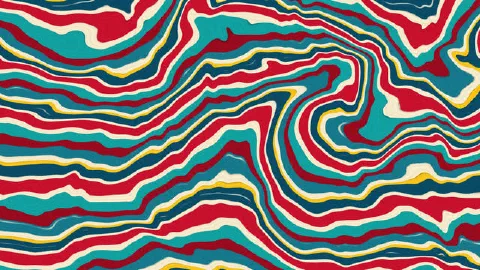 Endpaper
Turquoise, carmine, cream and a thread of gold: the colors of old marbled endpapers, and the ones it all started with
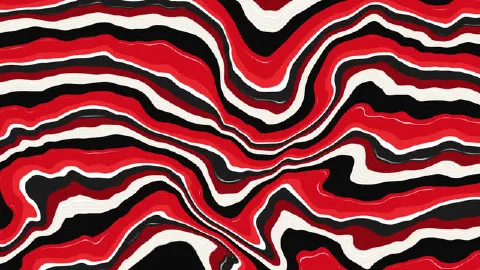 Red, black, white
My favorite combination, never the prettiest and always the strongest. Red is my color
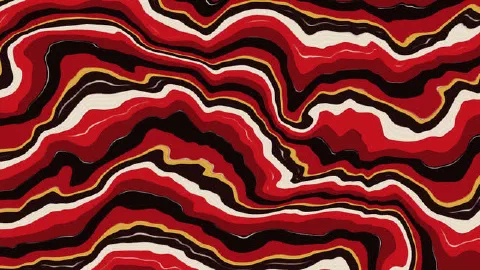 Sukuna
Near black, blood reds, bone and a sliver of gold, from Jujutsu Kaisen
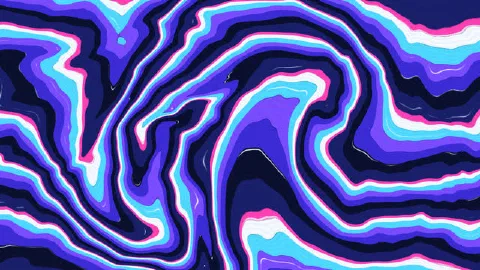 Gojo
Night blue, violet, cyan and a flash of pink: his Hollow Purple
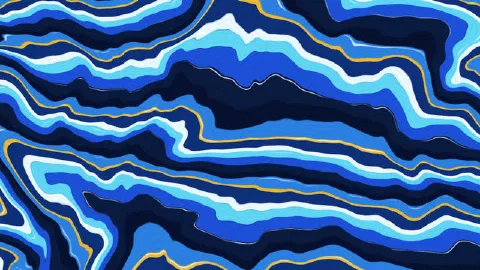 Nanami
Navy and cobalt with a touch of gold, for the man the page is named for
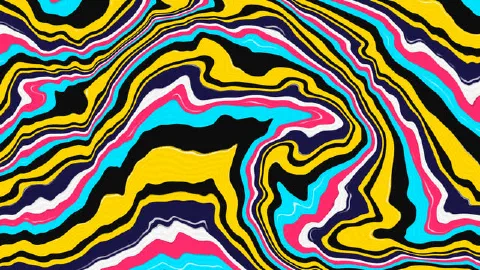 David
The yellow and black of his jacket, with cyan and pink neon, from Cyberpunk: Edgerunners
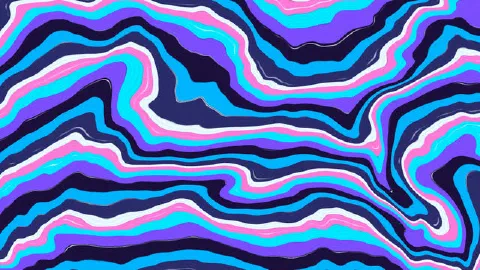 Lucy
Violet and cyan, her hair and the Moon she dreamed of
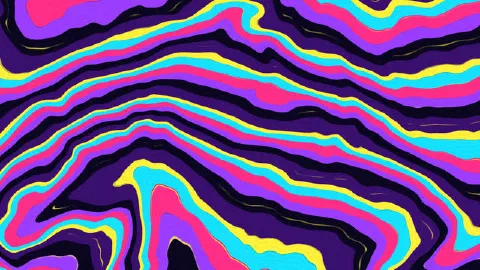 Night City
Neon pink, cyan and yellow on a deep purple night
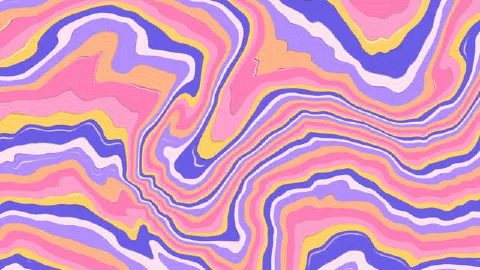 Lofi
Soft pink, peach, lavender and butter yellow, like the lofi cities I keep on in the background
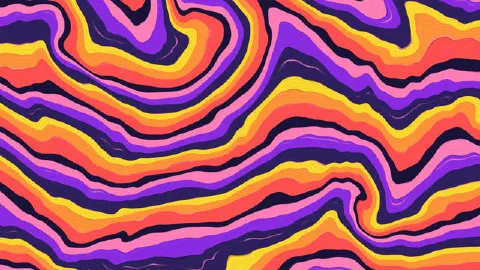 Pixel sunset
Red, orange and yellow over purple, a pixel-art city at dusk
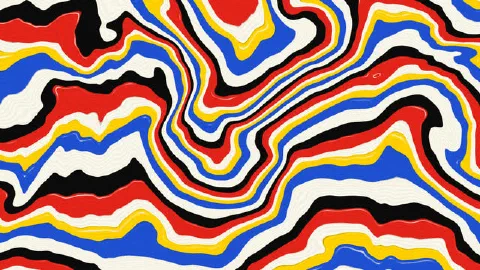 Bauhaus
Red, blue and yellow with black and cream: the primaries, plainly
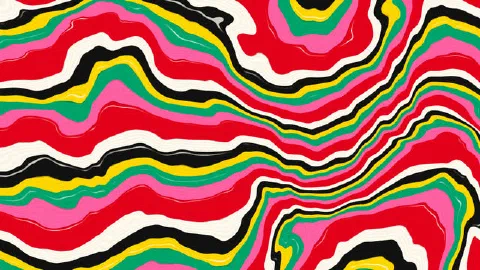 Pop
Red, pink, green and yellow, loud on purpose
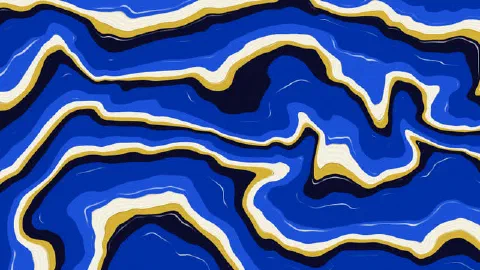 Klein and gold
Yves Klein’s blue with a little gold and cream
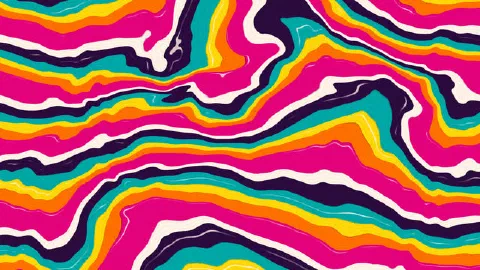 Rosa mexicano
Mexican pink with orange, yellow and turquoise
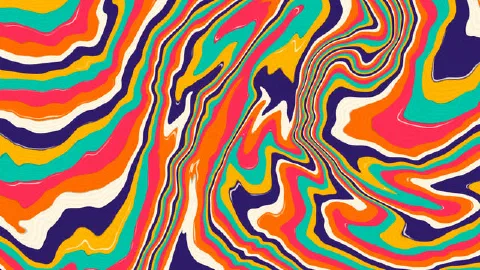 Tropical
Coral red, teal, amber and orange on deep indigo
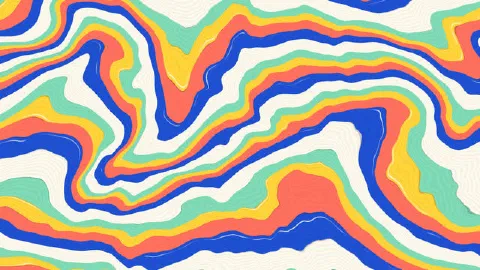 Matisse
Cobalt, coral, yellow and mint on cream, like his paper cut-outs
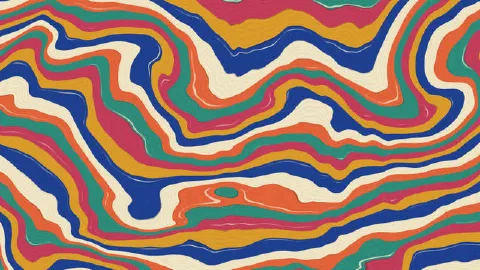 Ottoman
Lapis, ochre, rose madder, green and cream, the colors of old ebru
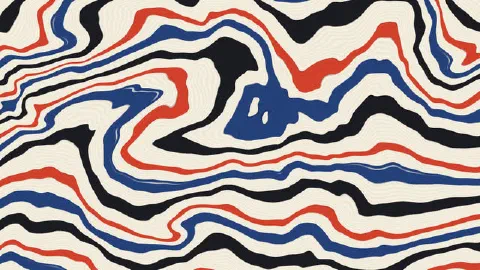 Sumi
Black and indigo ink on rice paper, with one red ring like a seal
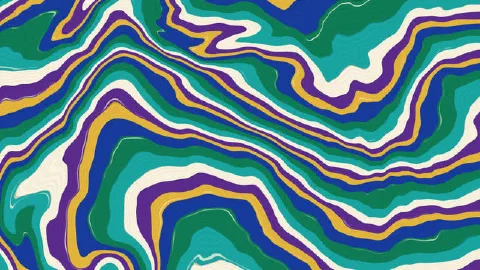 Peacock
Emerald, sapphire, gold and violet
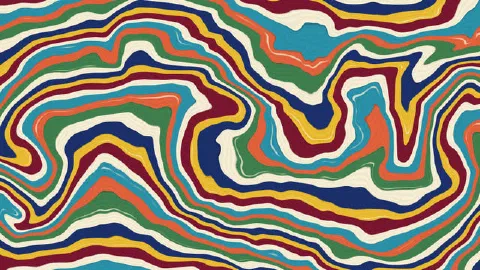 Victorian
Burgundy, gold, navy, green and cream, the papers inside nineteenth-century books
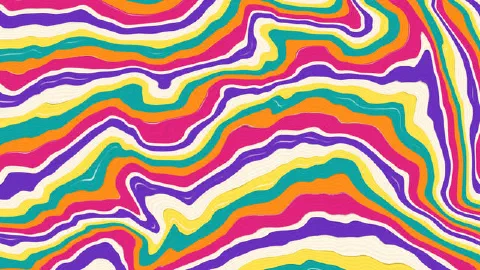 Carnival
Magenta, orange, teal, yellow and violet
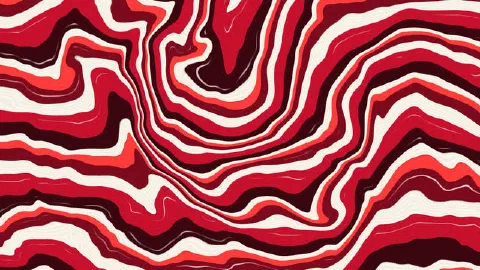 Red and cream
Reds from carmine to almost black, on cream
How It Is Made #
It is one page and one script of about 20 KB, with no libraries: a WebGL fragment shader that paints every pixel of the screen, every frame.
- Undoing the strokes. A comb’s tine moves the paint near it by
L · λ / (d + λ), wheredis the distance to the tine: a lot right by it, almost nothing far away. A drop of radiusrpushes the paint around it outward while keeping its area: a point at distanceρfrom its center came fromρ · √(1 − r²/ρ²). Each design is a short sequence of these, undone in reverse. - The bath’s current. Under every design, a slow current of noise (a warp of the coordinates by layered noise, itself warped) keeps the paint drifting, so no two minutes look the same.
- Threads. Real paint laid in several passes leaves thin light lines along each band. In the designs with wide bands, three such threads run inside every turn of the palette, exactly along the band, so a wide band never reads as flat color.
- Clean edges. Each pixel averages four samples across its width. Where the bands get finer than a pixel, they blend into the palette’s average color instead of shimmering; where the pattern jumps, at the edge of a drop, the edge stays crisp.
- Changing colors without changing the pattern. Two canvases take turns: the new palette is painted on the same bath, at the same moment, and fades in over the old one.
- Gentle on the machine. It draws at most about a million pixels and lets the browser scale them up, which suits something this soft; it stops when the page is not visible, and slows down for anyone who asks the system for reduced motion.
References #
- Aubrey Jaffer, Mathematical Marbling: the strokes of real marbling as formulas, and the idea of undoing them.
- Amanda Ghassaei, Digital Marbling: marbling as a simulation, beautifully explained.
- Paint Toys: Marbling: marbling to play with in the browser.